
Tolstoy Never Said It
(Despite what the Internet tells you)

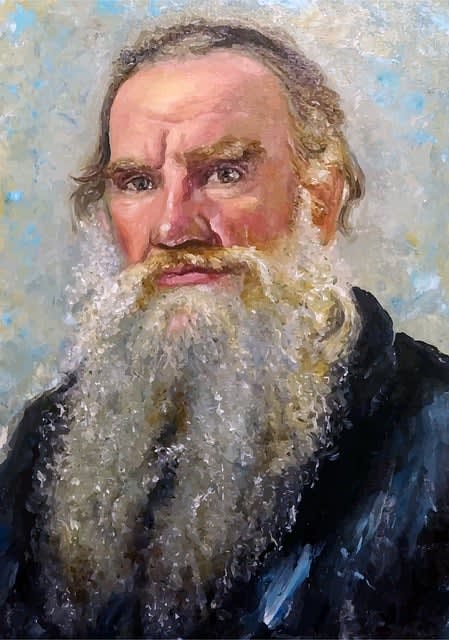
In the context of plotting a book, you’ve probably seen the lines “All great literature is one of two stories; a man goes on a journey or a stranger comes to town.” While those two motifs appear in literature as far back as Greek drama, the quote itself has been widely and falsely attributed to Tolstoy.
The quote is ubiquitous in varied forms, perhaps because having a genius utter this dictum gives it more weight than if it were stated by, say, Homer Simpson.
The attribution actually originated with some very specific advice John Gardner gave to young writers in his 1983 guide The Art of Fiction. It came in a group of suggestions that included this one:
Write the opening of a novel using the authorial-omniscient voice, making the authorial omniscience clear by going into the thoughts of one or more characters after establishing the voice. As subject, use either a trip or the arrival of a stranger (some disruption of order—the usual novel beginning).
The excellent research site Quote Investigator doggedly follows the trail of how Gardner’s lines have shape-shifted over the years and moved backward in time to Tolstoy. I highly recommend checking that site whenever you have doubts about the veracity of a quote, even if it’s omnipresent across the Internet.
Something similar has happened with the quote “Do anything, but let it produce joy.” You can find it in Henry Miller’s novel Tropic of Cancer but it’s widely posted as coming from Walt Whitman’s Leaves of Grass. The lesser-known, more modern author has been erased for an older one who is far more famous.
Mark Twain, Oscar Wilde and many other writers of distinction have also been cited as the source of advice and even wisdom, sometimes in language of “more than usually revolting sentimentality.” And that is a legitimate quote from my favorite play of all time, The Importance of Being Earnest. It’s one of the works that inspired my satirical Nick Hoffman mystery series, where my narrator loves to quote from plays, novels, and movies. He’s an English professor, after all. Besieged, disrespected, and even a murder target at one point, he manages to keep his sense of humor. And quote lots of writers too.
Lev Raphael’s Nick Hoffman mysteries have drawn on his many years in academia and been widely praised by the New York Times and many other publications. You can read about them at http://www.levraphael.com.
I'm glad to see John Gardner cited; he seems to have followed several predecessors into creeping oblivion, but for many years he was one of my favorite writers and thinkers about writing.
And Hemingway didn't say "There is nothing to writing. All you do is sit down at a typewriter and bleed."